

Award
The Adamastor Award
4th Edition
Award Ceremony for the 4th edition at the Faculty of Sciences of the University of Porto
The Adamastor Award — €20,000 — recognises innovative work by young scientists developed at a Portugal-based institution, in electrotechnics, computing, and related fields. The awarded work must demonstrate not only scientific excellence but also the potential to generate meaningful impact for society.


Motto
In Camões’ 16th-century epic Os Lusíadas — Portugal’s foundational literary work, which recounts the age of discovery and the sea voyage to India — the Adamastor is the giant that embodies the obstacle: the fear of the unknown, the limits imposed on those who dare venture into uncharted territory. When INESC was founded in 1980, Portugal faced a deep scientific and technological lag. Its founders adopted “Vencer o Adamastor” — Conquer the Adamastor — as their motto, because they believed Portugal could reach the frontier of science and technology despite that lag. Forty-five years later, the prize that honours the young scientists carrying that work forward bears the same name.
Read more
The institutions of the INESC group, and many others that followed adopting similar models, have since played a significant role in the Portuguese science and technology system. But Portugal is not yet the country we would all want it to be — a leader in science and technology, where scientists and innovators are seen as role models and inspire new generations. The Adamastor Award was established to give visibility to exceptional work by young scientists who are Portuguese or have been based in Portugal for at least three years, and who demonstrate scientific excellence, vision, and leadership capacity.
Laureates of Past Editions

Gonçalo Correia's work addressed two of the most pressing problems in AI models: opacity - the inability to explain their own decisions - and computational cost, which carries significant energy and environmental impact. His solution trains the model to ignore what is not relevant, rather than processing everything with equal weight. The result is a model that is more compact, more efficient, and easier to interpret.
Gonçalo Correia is currently Head of AI at Priberam and Visiting Assistant Professor at Instituto Superior Técnico, in Lisboa.

Manuel Goulão's work addressed how to use sensitive data from multiple sources jointly without exposing it, using protocols that allow multiple parties to perform operations on shared information without any of them accessing each other's data. The work was developed with the threat of quantum computing in mind, knowing that current encryption systems will become vulnerable as quantum computers grow sufficiently powerful.
Manuel Goulão is currently a researcher at INESC-ID, in Lisbon .
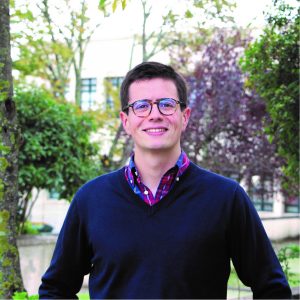
Pedro Orvalho's work addressed a concrete problem in programming education: correcting code errors consumes a significant part of teachers' time, often on basic-level issues. MENTOR identifies the error, delivers personalised immediate feedback to the student, and encourages them to solve the problem on their own, without offering the solution. Students learn more and teachers are freed up for the questions that truly require human attention.
Pedro Orvalho is currently an MSCA Postdoctoral Fellow at IIIA-CSIC, in Barcelona.
Jury of the Adamastor Award

José Manuel
Tribolet
IST/University of Lisbon and INESC
(President of the Jury)

Estela Guerreiro
Bicho
University of Minho

Henrique
Madeira
University of Coimbra

Isabel
Trancoso
IST/University of Lisbon

João Peças
Lopes
University of Porto and INESC TEC

José Carlos
Marques dos
Santos
University of Porto and INESC TEC

Luís
Caires
IST/University of Lisbon

Luís Oliveira
e Silva
IST/University of Lisbon

Mário
Figueiredo
IST/University of Lisbon

Pedro Guedes
de Oliveira
University of Porto and INESC

Susana
Sargento
University of Aveiro

Carla
Ferreira
NOVA School of Science and Technology
Universidade Nova de Lisboa

Partnership
In Partnership with Jornal Público
To promote the visibility of the award, its winner, and the importance of scientific development in its fields, INESC established a partnership with Jornal Público — Portugal’s leading quality newspaper — to be realised through mutual collaboration in the following phases:
1. Creating the award’s visual identity;
2. Publicising the award during the call for applications;
3. Covering the public award ceremony;
4. Disseminating the awarded scientific work and related technologies.